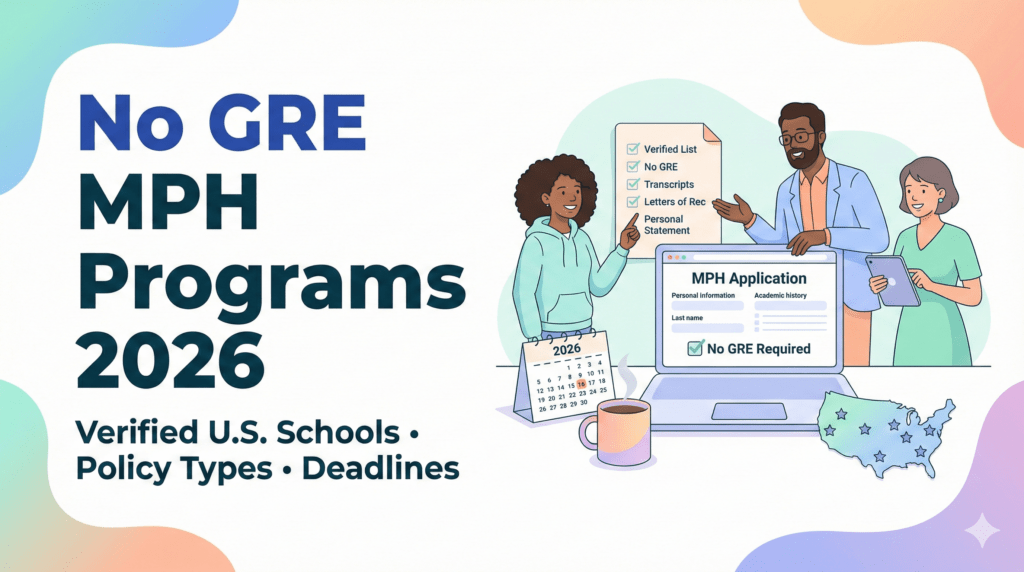
Quick answer (Fall 2026)
- Many MPH programs have GRE optional or GRE not required policies for Fall 2026 applicants (example: Columbia states standardized test scores are optional for Fall 2026 master’s applications). (publichealth.columbia.edu)
- “No GRE” is not one policy. It can mean optional, waived, or not considered, and the difference matters (example: BU explicitly says GRE is not required nor considered). (Boston University)
- Even when tests are optional, top schools still expect proof of quantitative/analytical ability through transcripts and other materials. (publichealth.columbia.edu)
Stop trusting random “No GRE” lists
Here’s the problem: the web is full of “Top X no-GRE MPH programs” pages that aren’t maintained. One major list admits its program tables were last updated November 2022. (publichealthdegrees.org) Another “best no-GRE MPH programs” ranking page is over 5 years old. (MPH Online)
So if you copy their lists, your article becomes outdated the moment you publish it.
Table of Contents
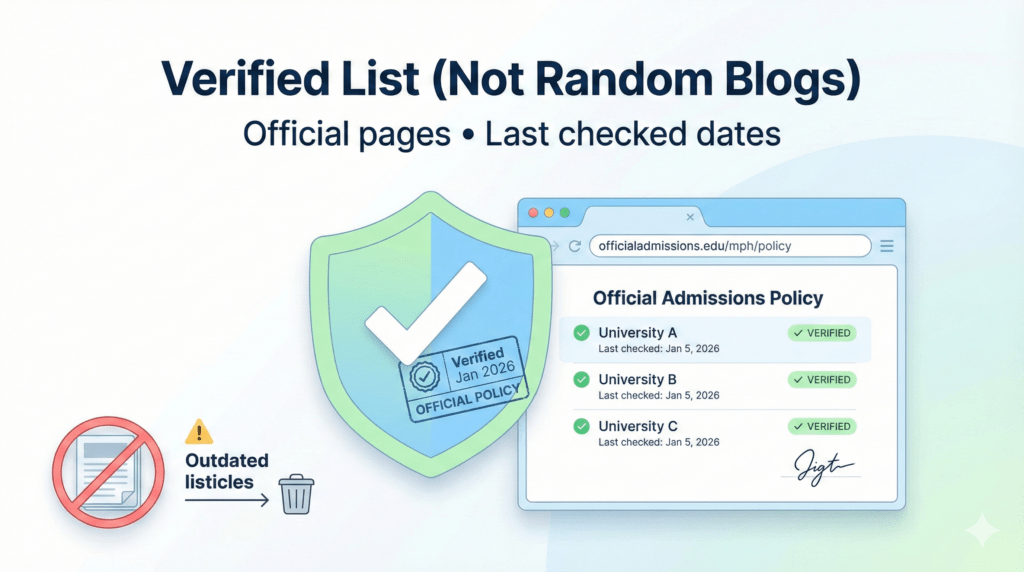
Your edge for 2026: only include programs where you can cite the official admissions page, and add a “last checked” date beside each entry.
What “No GRE” actually means (4 policy types)
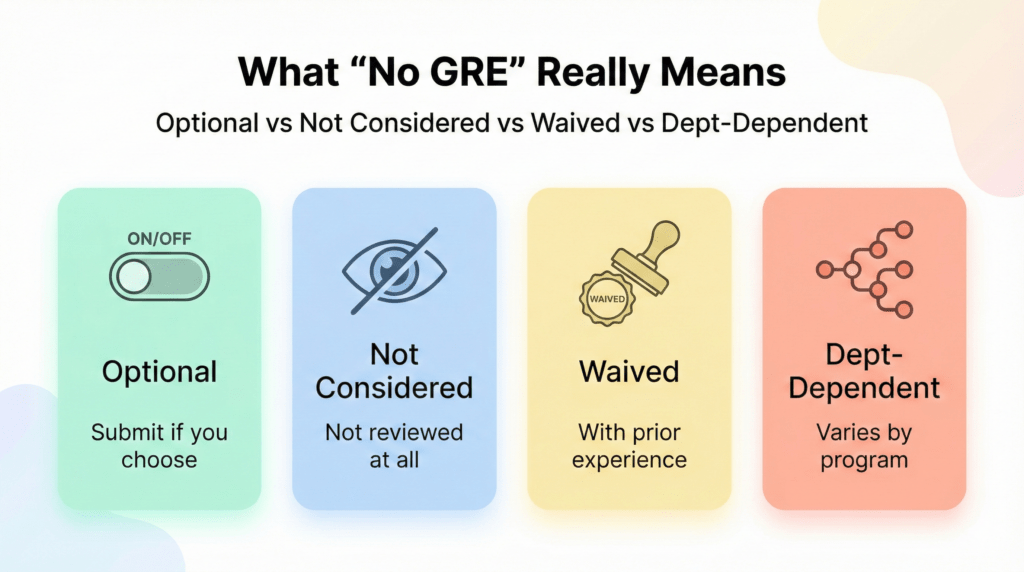
1) GRE Not Required / Not Considered
This is the strongest form of “no GRE.” If they don’t consider it, submitting a score is pointless. Boston University SPH states the GRE is not required nor considered for MPH admissions, and the online MPH page also says it won’t be considered if submitted. (Boston University)
2) GRE Optional
Optional means you can apply without it — but the program may still value evidence of quant ability elsewhere. Johns Hopkins explicitly says test scores are optional and they’ll make “no assumptions” if omitted, but still require quantitative/analytical evidence via other application components. (Johns Hopkins Public Health)
3) GRE Waived (Conditional)
Waiver policies usually depend on GPA, prior degrees, or experience. You must check the exact condition on the program’s page (don’t assume).
4) Department-dependent
Same school, different departments = different rules. This is why your article must repeatedly tell readers: “Verify on the department page.”
Non-negotiable 2026 filter: verify accreditation (fast)
Before you shortlist anything, verify the school/program in the CEPH accredited directory. CEPH states its list of accredited schools/programs is updated within 30 days of an accreditation decision. (ceph.org)
Why this matters: it keeps your “no GRE MPH programs” list from turning into a junk directory page.
Should you submit the GRE if it’s optional for Fall 2026?
People hear “GRE optional” and panic-submit whatever score they have. That’s usually a mistake. Optional doesn’t mean “recommended.” It means you’re allowed to skip it—and in many cases, you should.
1) First, figure out what the school actually means
This is where applicants mess up.
A) “Not required nor considered”
If a program says they don’t consider GRE scores, sending them is pointless. Boston University SPH states the GRE is not required nor considered for MPH admissions, and the online MPH page also notes scores won’t be considered even if submitted.
B) “Optional”
Optional means they’ll evaluate you without it—and you won’t be punished for leaving it out. Johns Hopkins says standardized test scores are optional; if you omit them they “make no assumptions,” but you still need to show quantitative/analytical ability through other parts of the application.
C) “Optional for Fall 2026”
Same idea, but tied to the 2026 cycle. Columbia states test scores are optional for Fall 2026 master’s applications and expects evidence of quantitative and analytical writing ability.
2) The decision rule (simple and ruthless)
Submit the GRE only if it clearly makes your application stronger.
That means both of these are true:
- Your score is genuinely strong (not “fine,” not “average”), and
- Your application currently lacks a clean signal of readiness—especially quantitative readiness.
If either condition fails, don’t submit. You’re not “adding something,” you’re adding another way to look weak.
3) What this looks like in real life (pick your situation)
Scenario A: Your transcript already proves you can handle the math → skip it
If you’ve got solid grades in stats/epi/research methods (or anything that signals quantitative competence), the GRE won’t move the needle unless it’s exceptional. Programs with optional policies still expect quant evidence somewhere—just not necessarily through a test.
Scenario B: Your transcript is weak on quant → submit only if your GRE is strong
If your GPA is shaky or you have little/no quant coursework, a strong GRE can help—when the school actually reviews scores. But if your score is not clearly strong, it can backfire. Johns Hopkins is explicit that skipping scores is fine, but you must still demonstrate quantitative/analytical ability via other components.
Scenario C: Career switcher with thin academics → GRE won’t save you
If you’re pivoting into public health and your academic record doesn’t show quant strength, the better fix is coursework + a tight SOP that shows analytical thinking. Columbia explicitly expects evidence of quantitative and analytical writing ability for Fall 2026 applicants.
Will skipping the GRE hurt me if it’s optional?
Not automatically. Schools with optional policies say they won’t assume anything negative if you omit scores—but you still need to prove readiness elsewhere (transcripts, supplemental questions, writing).
Should I submit a “mediocre” score just in case?
No. “Just in case” is how people volunteer a weak signal. And if the school doesn’t consider scores anyway, it’s wasted effort.
How to prove quantitative readiness without the GRE (Fall 2026)
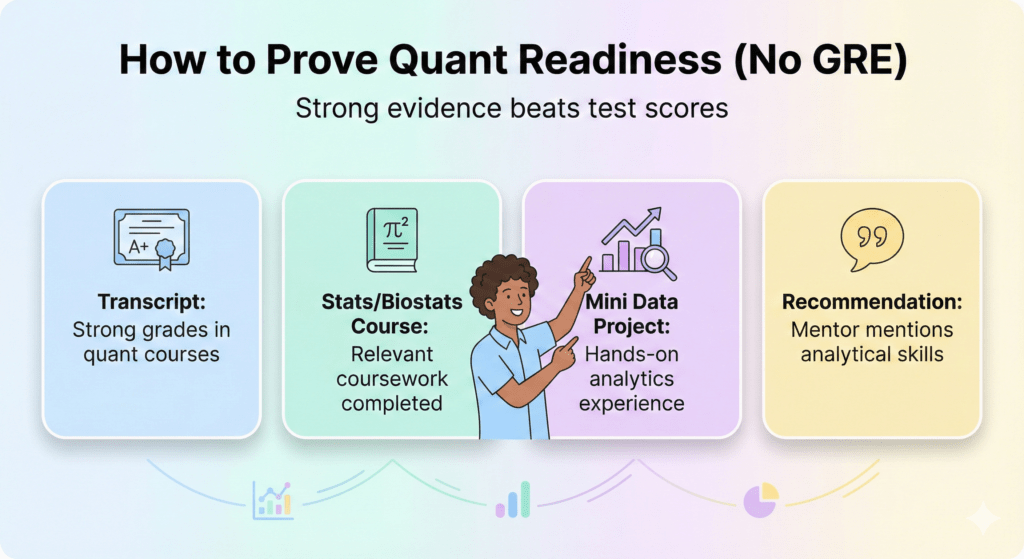
If you’re applying to no-GRE MPH programs for Fall 2026, here’s the part people underestimate: skipping the GRE doesn’t remove the need to prove you can handle MPH-level quantitative work. Top schools say this outright—scores may be optional, but they still expect evidence of quantitative/analytical ability through other parts of your application.
Quick answer (what works)
To get into a no GRE MPH program without looking risky, you need at least 2 strong quant signals:
- Transcript evidence (best),
- Graded coursework proof (strong),
- Applied project evidence (strong if real),
- Recommendations that mention analytical ability (supporting),
- SOP that demonstrates quant thinking (mandatory).
1) Transcript evidence (the strongest signal)
If your transcript already shows:
- Statistics / Biostatistics
- Epidemiology
- Research methods
- Math (algebra/calculus)
- Data/analytics course
…then you’re already ahead. In that case, don’t waste time chasing “certificates.” Your job is to surface these courses clearly in your SOP and resume, and (if possible) tie them to a project.
What to do (concrete):
- In your resume “Education” section, add a mini line:
Relevant coursework: Biostatistics, Epidemiology, Research Methods, Data Analysis - In SOP, give one sentence connecting coursework → applied outcome (example below).
2) If your transcript is weak on quant: get graded coursework (not just Coursera)
If you don’t have strong quant grades, your fastest credible fix is graded coursework that produces an official transcript (community college, university extension, accredited online university course).
Best “credit-bearing” options (choose 1–2):
- Intro Statistics (with a final grade)
- Biostatistics / Public health statistics
- Epidemiologic methods (basic)
- Research methods + data analysis component
Hard truth: a Coursera certificate alone is weak because it’s easy to complete and doesn’t prove performance under grading. Use certificates only as a supplement—not your main proof.
3) Build one applied “public health data” project (simple, but real)
Most applicants write vague claims like “I’m interested in data.” That’s useless. Build one small project that proves you can think quantitatively.
Pick ONE project type:
- Descriptive analysis: prevalence, rates, trends, charts
- Association analysis: logistic regression / linear regression (basic)
- Program evaluation mini-study: pre/post or comparison group logic
- Systematic data cleaning + analysis: show process, not just output
Tools: Excel is acceptable for basic work; R/Python is better if you can genuinely use it.
What to include (minimum):
- A one-page PDF or Notion page summary: question → dataset → methods → results → interpretation
- 2–3 simple visuals (tables/plots)
- 3 bullet “limitations” (shows maturity)
4) Write your SOP like someone who can handle biostats (without sounding fake)
Your SOP must demonstrate analytical thinking, not just claim it. This matters even more when GRE is optional, because schools still want proof of quant/analytical ability in other materials.
Drop vague lines like:
- “I love research and data.”
- “I am passionate about epidemiology.”
Use evidence-based lines like:
- “In my [course/role], I analyzed [X] using [method/tool], which showed [result]. This experience confirmed I can handle MPH quantitative coursework and apply it to public health decisions.”
- “To strengthen my quantitative foundation for the MPH, I completed [graded stats/biostats course] and applied it in a small project analyzing [topic], focusing on [metric/model].”
One paragraph structure that works:
- Problem you care about (public health context)
- What you’ve done (quant evidence)
- Why MPH + concentration fits (skills gap)
- What you’ll do with it (specific outcome)
5) Make at least one recommender mention your analytical ability
Most recommendation letters are fluffy. You want one line that signals: this applicant can think, analyze, and execute.
Ask your recommender to include specifics like:
- “He interpreted data accurately and explained findings clearly.”
- “She handled statistical concepts and applied them to real problems.”
- “He produced evidence-based outputs under deadlines.”
6) What to do if you’re still worried about quant readiness
If you’re applying to GRE optional MPH programs and you’re borderline:
- Take one graded stats/biostats course (fastest credibility)
- Add one applied project
- Tighten SOP to show evidence + clarity
That combination typically beats “I submitted a mediocre GRE score.”
Verified No-GRE MPH Programs (Fall 2026): GRE Not Required and Not Considered
Last checked: Jan 4, 2026
A) GRE Not Required + Not Reviewed/Considered (strongest “No GRE”)
| School | Program | Format | GRE policy label | Notes | Official proof |
|---|---|---|---|---|---|
| Boston University School of Public Health | MPH / Online MPH | On-campus + Online | Not required + not considered | Submitting scores won’t help. | |
| University of Michigan School of Public Health | MPH | On-campus | Not required + not reviewed | School-wide statement for grad programs. | |
| NYU School of Global Public Health | MPH | In-person + Online | Not required + not considered | Explicit “not required nor considered.” | |
| Emory Rollins School of Public Health | MPH | On-campus | Not required + not considered | Exception: Biostatistics dept may differ (GRE optional). | |
| University of Florida | MPH | On-campus | Not required + not considered | Explicitly does not require/consider GRE. | |
| Tulane School of Public Health | MPH | On-campus / varies | Not required + not considered | School-wide statement. | |
| University of Washington | Epidemiology MPH | On-campus | Not required + not considered | Program detail listing. |
B) GRE Not Required (often “optional submission allowed”)
| School | Program | Format | GRE policy label | Notes | Official proof |
|---|---|---|---|---|---|
| Columbia Mailman | Master’s programs (incl. MPH) | On-campus | GRE not required (Test optional) | Fall 2026: scores optional; still expects quant evidence. | |
| Colorado School of Public Health | MPH | On-campus | GRE not required | “Not required / not expected” language. | |
| UIC School of Public Health | MPH | On-campus | GRE not required (Test optional) | Test optional. | |
| University of South Florida COPH | MPH | On-campus / varies | GRE not required | Stated as not required. | |
| UNC Gillings | MPH@UNC | Online | GRE not required | “Neither required nor typically recommended.” | |
| University of Washington | Online MPH (Health Systems & Population Health) | Online | GRE not required | “No longer required.” | |
| Drexel Dornsife SPH | MPH | On-campus + Online | GRE not required | Master’s admission page statement. | |
| Brown University | MPH | On-campus | GRE not required | Note: PhD Biostatistics differs. | |
| USC Keck | MPH | On-campus | GRE not required | Explicit not required. | |
| UC Irvine | MPH | On-campus | GRE not required | Explicit not required. | |
| Georgia State University | MPH | On-campus / online options | GRE not required | GRE/GMAT not required. | |
| Michigan State University | MPH | Online/asynchronous options | GRE not required | “No longer required.” | |
| University of Minnesota SPH | MPH | On-campus / varies | GRE not required | School guidance states GRE not required. |
C) Conditional / Exceptions (don’t label as “blanket no-GRE”)
| School | Program | Format | GRE policy label | Notes | Official proof |
|---|---|---|---|---|---|
| UCLA | MPH for Health Professionals | On-campus | GRE waived conditionally | Waived only if GPA ≥ 3.0; required if below. |
SOPHAS + Fall 2026 deadlines (Jan 2026 reality check + what to do this week)
It’s January 5, 2026. So here’s the truth: some Fall 2026 MPH deadlines are already gone, but you’re not automatically out. The key is understanding (1) SOPHAS cycle vs program deadlines, and (2) how verification + recommendations can make you miss a deadline even when you “submitted.”
Quick answer (AEO/snippet-ready)
- SOPHAS is open for the 2025–2026 cycle (it opened Aug 13, 2025). (Liaison)
- Many strong programs had Dec 1, 2025 deadlines for Fall 2026 (e.g., UW Epidemiology MPH). (Department of Epidemiology)
- Plenty of programs still accept applications in Jan–Mar 2026 (e.g., OHSU–PSU MPH Epidemiology through Mar 15, 2026). (OHSU-PSU School of Public Health)
- Your biggest enemy in Jan 2026 is verification + letters—not writing. BU explicitly warns SOPHAS verification can take 2–4 weeks and requires materials to be received and verified by their final deadlines. (Boston University)
1) SOPHAS being open doesn’t mean your target program is open
The SOPHAS 2025–2026 cycle opened Aug 13, 2025 and (cycle-wide) closes later in 2026. (Liaison)
That only tells you the platform is available. What matters is the program’s own deadline, and those vary wildly.
Example of a program already closed for Fall 2026:
- UW Epidemiology MPH: “The application deadline for Fall 2026 admission is December 1.” (Department of Epidemiology)
UW’s Autumn 2026 timeline pages also show the Dec 1, 2025 pattern for Fall/Autumn 2026 entry. (Health Systems and Population Health)
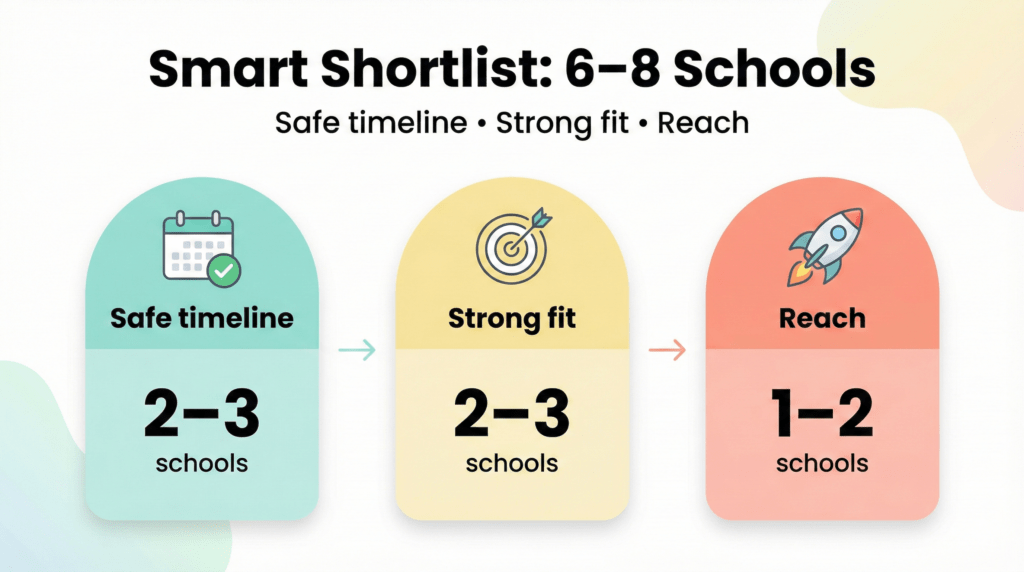
2) Priority vs final deadlines (this is how “still open” works in Jan 2026)
Many schools run two clocks:
- Priority deadline: earlier review + better scholarship consideration
- Final deadline: last day they accept applications (often spring/summer)
Concrete examples (so your article feels real, not theoretical):
- Emory Rollins: Jan 5, 2026 priority (scholarship consideration), May 1, 2026 preferred for international applicants, Jul 15, 2026 final. (Rollins School of Public Health)
- Boston University SPH (MPH): Jan 15, 2026 priority; Apr 1, 2026 international final; Jun 1, 2026 domestic final. (Boston University)
- OHSU–PSU MPH Epidemiology: accepting Fall 2026 applications Aug 15, 2025 – Mar 15, 2026; GRE no longer required (and any scores submitted won’t be considered). (OHSU-PSU School of Public Health)
How to write this in your article without confusing people:
Tell readers: “In January 2026, aim for priority deadlines if possible; if not, target programs with spring final deadlines.”
3) The Jan 2026 trap: “I submitted” vs “my application is complete”
Some schools don’t care that you clicked submit. They care that SOPHAS has verified your file and the program has received everything.
BU is extremely clear: all materials must be received and verified by SOPHAS by their final deadlines, and SOPHAS verification can take 2–4 weeks. (Boston University)
So in your article, spell it out:
What can delay completion (and cost you the deadline):
- SOPHAS verification time (2–4 weeks is a real number some schools cite). (Boston University)
- Recommendation letters arriving late (you can’t “force” a recommender to be on time).
- Transcript processing/matching inside the application system (admin delays are common).
4) What to do right now (Jan 5–Jan 31, 2026)
This is the actionable block your readers will love.
If you want a shot at January priority deadlines:
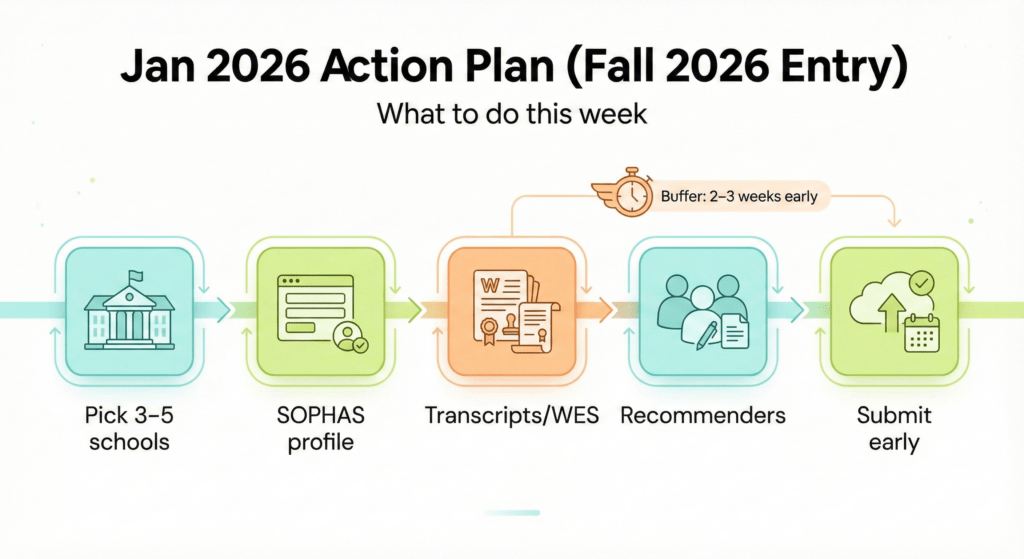
- Today: lock your school list to 3–5 programs max (don’t spray 15 applications in panic).
- Within 48 hours: request recommenders and give them a deadline 7 days earlier than yours.
- Within 72 hours: submit SOPHAS (even if your SOP is not “perfect”)—perfection is useless if you miss the window.
Target windows using real deadlines:
- Now → Jan 15, 2026: programs with mid-Jan priority deadlines (example: BU priority Jan 15). (Boston University)
- Now → Mar 15, 2026: programs with March deadlines (example: OHSU–PSU MPH Epi ends Mar 15). (OHSU-PSU School of Public Health)
- Now → Apr/Jun 2026: international/domestic final deadlines at some schools (example: BU Apr 1 intl final; Jun 1 domestic final). (Boston University)
- Now → Jul 15, 2026: if you’re targeting Emory’s final window (but you lose scholarship priority after Jan 5). (Rollins School of Public Health)
Is it too late for Fall 2026 MPH on Jan 5, 2026?
Not universally. Some programs are already closed (Dec 1 deadlines exist, e.g., UW Epi MPH), but others run into March or later. (Department of Epidemiology)
What’s the smartest “Jan 2026” strategy?
Pick programs with open windows and submit early enough to survive verification and recommendation delays (BU explicitly warns about 2–4 week SOPHAS verification). (Boston University)
Does “No GRE” change the timeline?
No. It removes one component, but deadlines and verification rules still apply (e.g., OHSU–PSU says GRE isn’t required, but the application window still ends Mar 15, 2026). (OHSU-PSU School of Public Health)
International applicants (Jan 2026): “No GRE” doesn’t mean “no extra requirements”
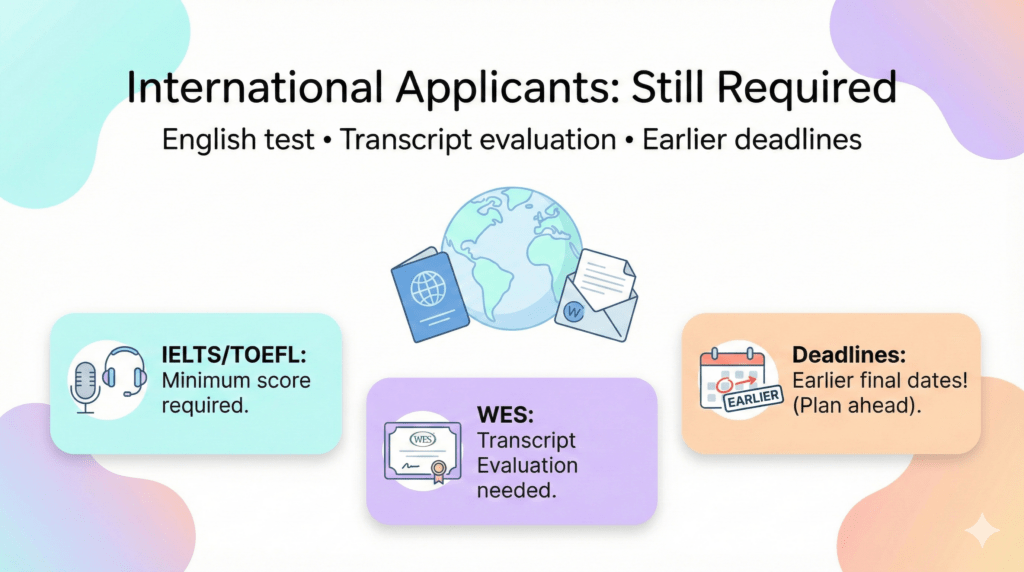
If you’re applying as an international applicant for Fall 2026, the GRE is usually the easiest part to remove. The real friction is English testing, foreign transcript evaluation, and earlier international deadlines.
Quick answer (AEO-friendly)
- Many top schools still require an English proficiency test unless you meet specific exemptions (examples: Johns Hopkins and Harvard both spell out English testing expectations for international applicants). (Bloomberg School of Public Health)
- If your transcripts are from outside the U.S./English-Canada, you may need a WES course-by-course evaluation sent to SOPHAS (several schools explicitly require WES and reject other agencies). (School of Public Health)
- International final deadlines can be earlier than domestic (example: BU lists April 1, 2026 as the international final deadline and warns SOPHAS verification can take 2–4 weeks). (Boston University)
1) English language testing: don’t confuse this with GRE
Even if the program is “no GRE,” many will still ask for proof of English proficiency if your prior degree wasn’t taught in English (or if you don’t meet their exemption rules).
- Johns Hopkins (Bloomberg) says most international applicants must submit English test scores unless they meet exemption criteria; they accept tests like IELTS and note SOPHAS applicants submit IELTS scores directly to SOPHAS. (Bloomberg School of Public Health)
- Harvard also states you must provide an English proficiency score if English isn’t your first language and you don’t meet their exemption conditions; they accept TOEFL/IELTS/Duolingo (program-specific rules still apply). (Harvard Chan School of Public Health)
What to write in your article (simple and accurate):
- “No GRE” ≠ no tests. GRE is admissions testing; English tests are language eligibility.
- Always check the program page for exemptions, accepted tests, score validity window, and where to send scores.
2) Foreign transcript evaluation: WES is the common gatekeeper
This is where international applicants lose weeks.
Many SOPHAS-participating programs require a WES course-by-course evaluation for foreign transcripts, sent directly to SOPHAS—and some explicitly won’t accept other agencies.
- University of Minnesota SPH: requires a WES ICAP course-by-course evaluation of all foreign transcripts; must be sent to SOPHAS; other agencies won’t be accepted. (School of Public Health)
- A University of Washington MPH program page notes SOPHAS only accepts foreign transcript evaluations from WES. (Food Systems)
- Michigan SPH notes SOPHAS treats English Canadian transcripts as non-foreign (so WES may not apply there), which shows how exceptions exist. (U-M School of Public Health)
What to do (Jan 2026 action):
- If you studied outside the U.S./English-Canada, assume you may need WES until the program says otherwise.
- Start WES early because it can become your bottleneck, not your SOP.
3) Deadlines: international applicants often have earlier “final” dates
This matters right now because it’s already Jan 5, 2026.
- BU MPH (Fall 2026): Priority Jan 15, 2026; International final Apr 1, 2026; they also warn SOPHAS verification can take 2–4 weeks and materials must be received and verified before the final deadline. (Boston University)
- Emory Rollins: May 1, 2026 is the preferred deadline for international applicants (and they explicitly say applications may still be reviewed after May 1, but deferment to the following fall may be recommended). (Rollins School of Public Health)
Translation: if you’re international and you want Fall 2026 to be realistic, you don’t “have time.” You have a shrinking window.
4) If you’re starting today (Jan 5, 2026): a realistic plan
This is the part your readers actually need.
This week (Jan 5–Jan 12)
- Pick 3–5 programs only (panic-applying to 15 kills quality).
- Request recommenders immediately.
- Start transcript and WES steps if applicable.
By early March 2026
- You should be submitting anything with an April 1 international final (BU-type), because verification alone can take 2–4 weeks. (Boston University)
By early–mid April 2026
- You should be done for programs where international “preferred” deadlines are May 1 (Emory-type), unless you’re willing to risk being pushed to the next fall. (Rollins School of Public Health)
I’m applying “No GRE.” Do I still need IELTS/TOEFL?
Often yes, unless you meet the program’s exemption rules. Schools like Johns Hopkins and Harvard outline English testing requirements for international applicants. (Bloomberg School of Public Health)
Do I need WES for SOPHAS?
If your transcripts are foreign, many programs require WES course-by-course evaluation sent to SOPHAS (some explicitly reject other agencies). (School of Public Health)
Final checklist (Jan 2026): what to do now for Fall 2026 MPH
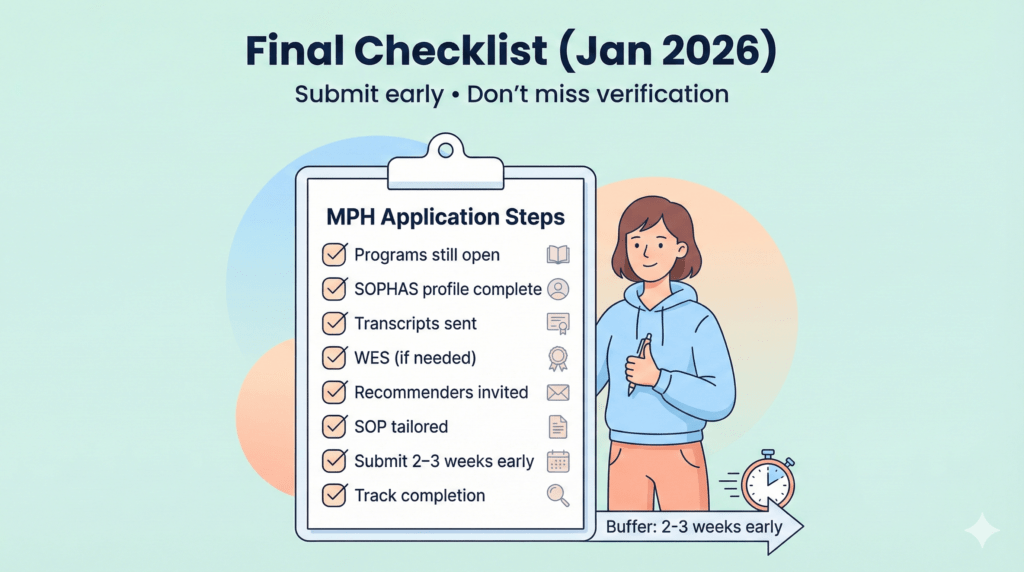
It’s Jan 5, 2026. At this point, “polishing” is not your bottleneck. Completion is. The fastest way to lose the cycle is to write a great SOP and then get stuck on transcripts, WES, or late recommenders.
1) Decide what’s still possible (10 minutes)
Some Fall 2026 programs already closed in Dec 2025 (example: UW Epidemiology MPH lists a Dec 1 deadline for Fall 2026).
Others are still open into spring (example: OHSU–PSU MPH Epidemiology accepts applications until Mar 15, 2026).
So the first move is not “apply everywhere.” It’s: cut anything closed and focus on what’s open.
2) Lock a short list (don’t be unrealistic)
Pick 3–5 programs you can finish properly this month. If you try 12 programs now, quality collapses and you miss deadlines anyway.
Use a simple mix:
- 1–2 programs with March deadlines (open-window targets)
- 2–3 programs with April–June finals (gives you breathing room) — example: BU shows Apr 1, 2026 international final and Jun 1, 2026 domestic final.
3) Open SOPHAS and finish the profile first
SOPHAS being open just means the platform is available. The 2025–2026 SOPHAS cycle opened Aug 13, 2025.
What matters is that your profile is complete enough to submit fast.
Do the slow parts first:
- Academic history
- Experiences/achievements
- Program selections + requirements check
4) Trigger transcripts today (no excuses)
Transcript delays are silent and brutal. Request every transcript now.
If your universities are slow, you need that clock running immediately. Waiting “until SOP is ready” is backwards.
5) If you’re international: handle WES early or you’ll lose weeks
If you studied outside the U.S. (and outside English Canada), many programs require a WES course-by-course evaluation sent to SOPHAS. Minnesota SPH explicitly requires WES ICAP course-by-course and won’t accept other agencies.
UW program guidance also points to WES for SOPHAS foreign transcript evaluation.
If WES applies to you, start it now. It can take longer than your writing.
6) Recommendations: send requests now with a deadline earlier than yours
Your application isn’t “done” when you submit. It’s done when letters are in.
Send requests today and give recommenders:
- Your CV
- SOP draft (even if rough)
- 4–6 bullets on what they should highlight
- A deadline 10–14 days before the program deadline
7) Submit early enough to survive verification delays
Some schools are explicit that SOPHAS verification can take 2–4 weeks, and they require materials to be received and verified by deadlines. BU says this clearly.
So stop aiming for “deadline day.” Aim for 2–3 weeks before.
8) No GRE doesn’t mean no proof of quantitative ability
If you’re skipping the GRE and your transcript is weak on stats/epi, you must compensate. Columbia’s Fall 2026 policy is a good example of test-optional but still expecting evidence of quant/analytical ability.
At minimum, make sure your application shows:
- relevant coursework (stats/epi/research methods), or
- a small data/project example, or
- strong academic references that mention analytical ability.
9) Track completion like a checklist (so you don’t lose control)
Make a simple tracker with these rows per program:
- Deadline
- SOP submitted
- Transcripts received
- WES received (if needed)
- Recommenders invited
- Letters received
- SOPHAS verified
- Application complete
FAQs
Is it too late to apply for Fall 2026 MPH if it’s January 2026?
Not automatically. Some programs already closed (there are Dec 1 deadlines for Fall 2026, like UW Epidemiology MPH). Others are still open into spring (example: OHSU–PSU MPH Epidemiology runs through Mar 15, 2026).
What’s the difference between “GRE optional” and “GRE not considered”?
“Optional” means you may submit and they may look at it; “not considered/reviewed” means submitting is pointless. BU explicitly says GRE is not required nor considered. Michigan states it does not require and does not review standardized tests.
If GRE is optional, should I submit it?
Only if it clearly strengthens your file. If the score is average/weak, don’t hand them extra ammo to judge you. If the school doesn’t review scores, never submit.
If I don’t submit GRE, what matters most?
Proof you can handle MPH-level quantitative work + clear writing. Schools with test-optional policies still emphasize evidence of quantitative/analytical ability through transcripts and application materials (e.g., Columbia Fall 2026 test-optional language; Johns Hopkins “optional” guidance).
Does “No GRE” mean I don’t need IELTS/TOEFL?
No. GRE is an admissions test; English tests are a language requirement. Many programs still require English proficiency unless you meet exemptions (e.g., Johns Hopkins and Harvard describe these requirements).
Do international applicants need WES for SOPHAS?
Often, yes—if your transcripts are “foreign” for SOPHAS. Some programs explicitly require WES course-by-course and won’t accept other agencies (e.g., Minnesota SPH), and UW guidance points to WES for SOPHAS evaluations.
SOPHAS is open—does that mean my program deadline is open?
No. SOPHAS is just the platform/cycle. The SOPHAS 2025–2026 cycle opened Aug 13, 2025, but each program sets its own deadlines.
How early should I submit before the deadline?
At least 2–3 weeks, because verification and missing items (letters/transcripts) can burn you. BU explicitly warns SOPHAS verification can take 2–4 weeks and materials must be received/verified by final deadlines.
Are no-GRE MPH programs less respected by employers?
Generally, employers care more about the school/program quality, skills, practicum experience, and what you can actually do. A no-GRE policy doesn’t equal “easy”—many programs simply shifted evaluation to coursework, writing, and experience.
Do online MPH programs usually require GRE?
Many don’t, but policies vary. Example: UNC’s MPH@UNC says GRE is neither required nor typically recommended; UW’s Online MPH says GRE is no longer required.
What if my GPA is low and I’m applying no-GRE?
You need to compensate with real signals: graded quant coursework (stats/biostats), a small applied data project, strong letters that mention analytical ability, and an SOP that shows clarity and fit. Test-optional schools still want quant/analytical evidence somewhere.
Can I still get scholarships if I apply after priority deadlines?
Sometimes, but odds usually drop. Schools often use “priority” deadlines for funding review (e.g., BU and Emory show priority dates vs later finals).
Internal Links:
Accelerated 1-Year MPH Programs (2025 Guide): Accredited 12-Month MPH Options
Best Online MPH Programs 2025 (CEPH-Accredited)
