Hot Tub Legionnaires’ disease is a serious form of pneumonia caused by Legionella bacteria. People get sick after breathing tiny droplets of contaminated water—often from everyday places like hot tubs, home water heaters and showers, decorative fountains, or large building cooling towers. In other words, Legionnaires’ disease starts with Legionella in water systems that aren’t properly maintained, not from casual contact with other people.
Symptoms can appear 2–14 days after exposure and may start like the flu before getting worse, which is why quick awareness matters. This guide explains what to watch for, when to see a doctor, and simple steps you can take to lower risk at home, at the gym, or while traveling. If you’ve recently used a spa or stayed in a hotel and feel unwell, the information below will help you decide your next move—fast.
Symptoms (The Early Warning Signs)
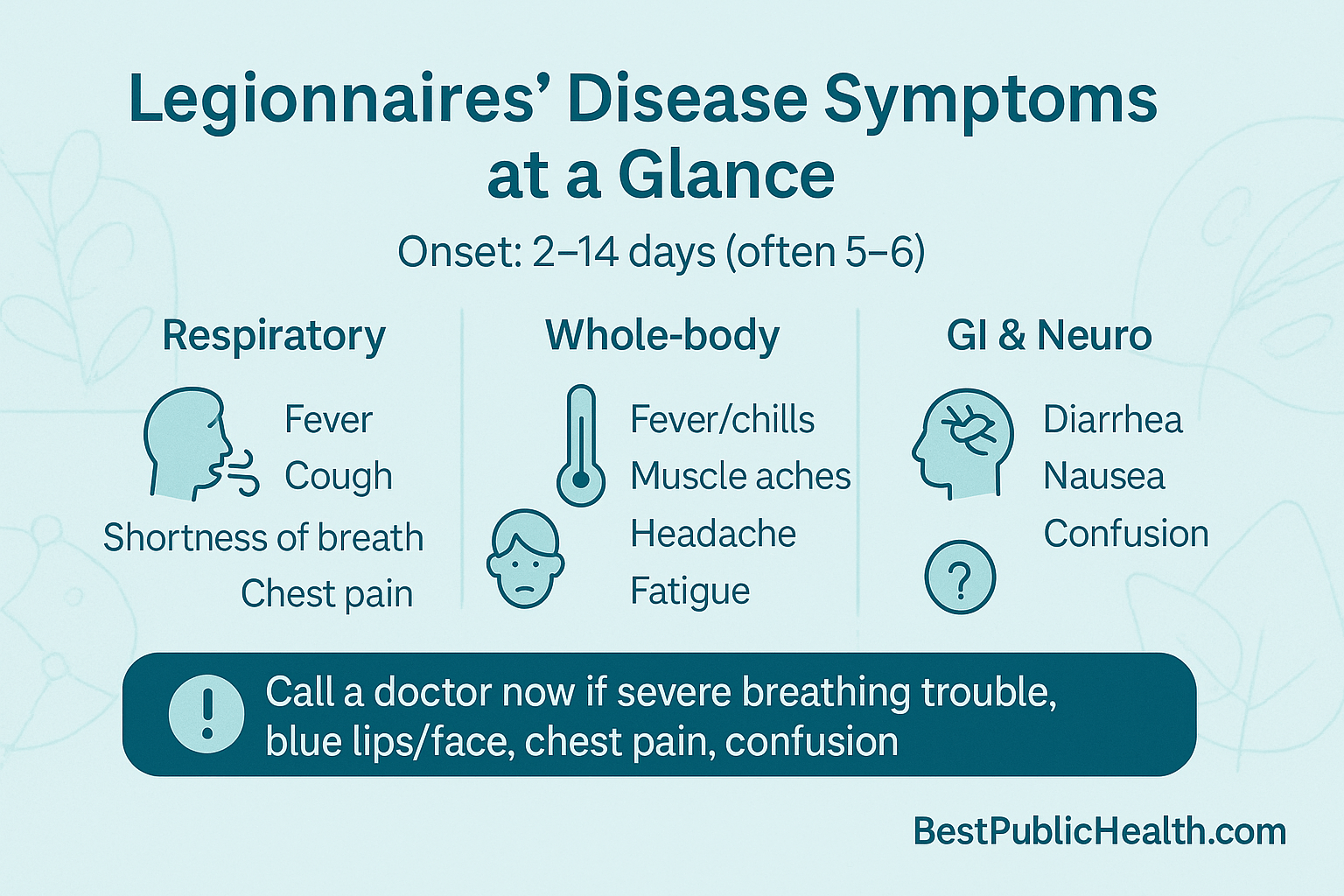
Legionnaires’ disease symptoms usually begin like a bad flu and then ramp up fast. Most people start to feel sick 2–14 days after breathing in contaminated mist (often around day 5–6). Because this is a pneumonia caused by Legionella (often called legionella pneumonia), pay attention to chest and breathing signs—plus a few “extra” clues that set it apart.
What most people notice first
- Fever and chills (often high, sometimes with sweats)
- Cough (dry or with phlegm)
- Shortness of breath or tight chest
- Muscle aches, headache, and deep fatigue
Clues that point toward Legionella
- Diarrhea, nausea, or stomach upset
- Confusion or feeling “out of it”
- Chest pain with breathing or coughing
Quick tip: That mix of pneumonia symptoms + GI (diarrhea) or mental changes is a classic pattern in Legionnaires’ disease.
Easy-to-read symptoms guide
| Level | What you might feel | Why it matters | What to do |
|---|---|---|---|
| Mild | Low-grade fever, dry cough, body aches, tiredness | Early legionella symptoms can mimic a viral bug | Rest, hydrate, and watch closely for 24–48 hrs |
| Concerning | Fever climbing >101–102°F, cough with phlegm, shortness of breath, diarrhea | Pattern suggests legionella pneumonia symptoms rather than a simple cold | See a clinician today; mention any hot tub/hotel use in the last 2 weeks |
| Emergency | Severe breathing trouble, blue lips/face, chest pain, confusion, fainting | Could be serious legionnaires pneumonia symptoms | Call emergency services or go to the ER now |
Who should act sooner: adults 50+, current/former smokers, anyone with chronic lung disease or a weakened immune system. If that’s you and you develop the symptoms above—especially after a hot tub, hotel stay, or long trip—don’t wait. Tell the clinician you’re worried about Legionnaires’ disease so they can test and treat quickly.
Is Legionnaires’ Disease Contagious?
Short answer: No—Legionnaires’ disease isn’t usually contagious.
Most people don’t catch it from someone else. You get sick by breathing in tiny droplets (mist/steam) from contaminated water, not from hugs, talking, or sharing a room.
How people actually get it
- Hot tubs/spas and showers that aerosolize water
- Home water heaters and complex building plumbing with warm, stagnant water
- Cooling towers, decorative fountains, misters
- Less commonly: contaminated humidifiers or medical/respiratory devices
Rare exceptions?
There have been very rare reports suggesting possible person-to-person spread, but this is not how community transmission happens. For day-to-day life, treat Legionnaires’ as non-contagious.
What this means for you
- If you’re sick, you don’t need to isolate from family like with flu or COVID.
- Focus on where the water came from (e.g., a recent hot tub or hotel stay) and see a clinician if you have symptoms.
- If you manage a spa or building system, proper water maintenance is the prevention step that matters.
Hot Tub Risks
Why hot tubs are a problem:
Legionnaires’ disease in hot tubs happens because spas are warm (≈100–104°F), turbulent, and full of tiny droplets. If the water isn’t disinfected and balanced, Legionella can grow in the plumbing and biofilm. The jets then aerosolize that water so you breathe it in. Hotels, gyms, vacation rentals, and poorly maintained backyard tubs are the usual culprits.
What real outbreaks look like:
Clusters often trace back to a shared spa—a hotel hot tub, cruise-ship spa, or community whirlpool that wasn’t maintained. People feel fine at checkout, then 2–14 days later they develop fever, cough, and other hot tub Legionella symptoms.
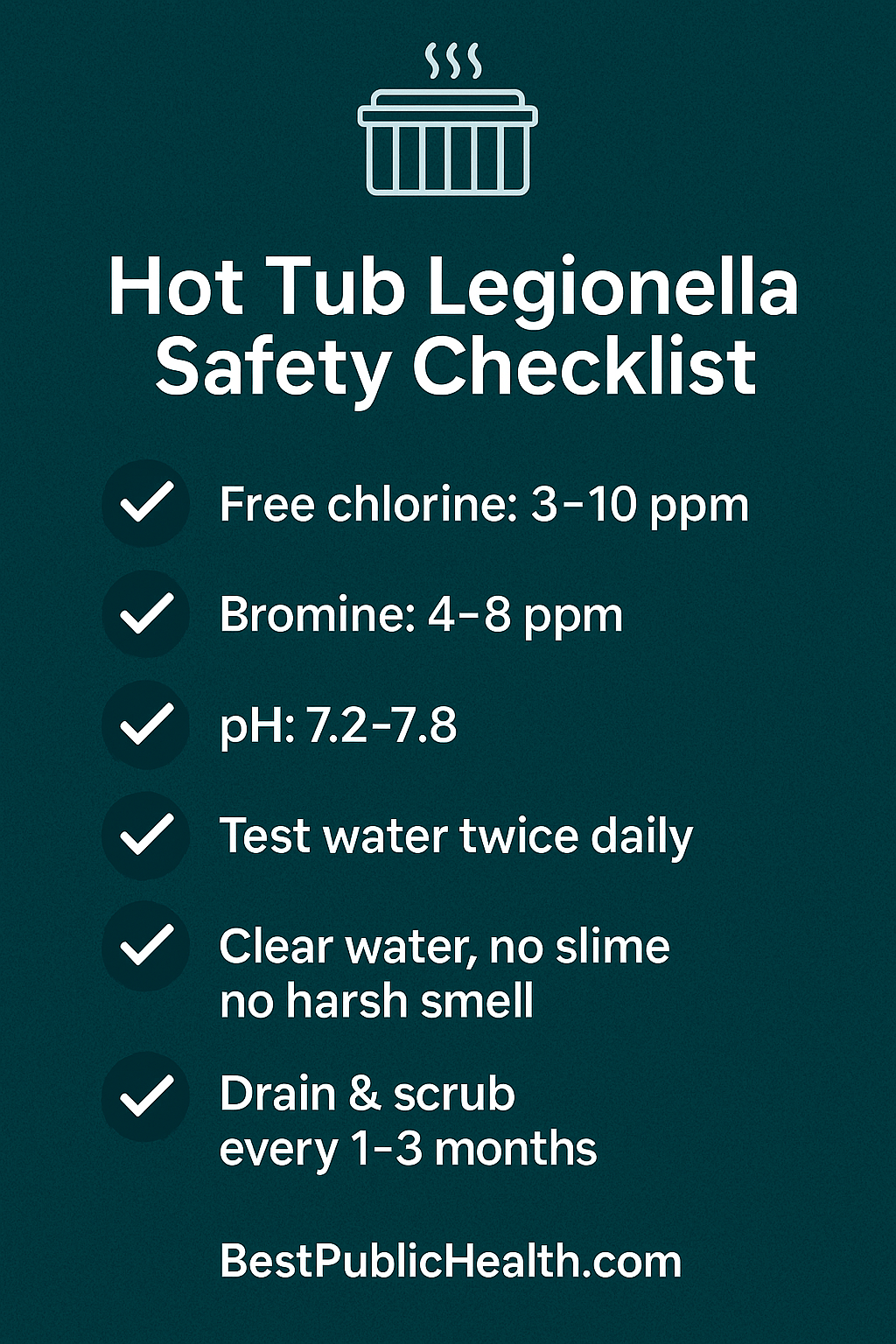
Hot-tub safety checklist (before you get in)
- Test the water yourself (cheap strips at any store).
- Free chlorine: 3–10 ppm or bromine: 4–8 ppm
- pH: 7.2–7.8
- See the logbook. Ask staff when levels were last checked (should be at least twice daily).
- Look & smell. Water should be clear, with no slimy surfaces and no strong “chlorine” odor (that smell often means poorly maintained water).
- Filters & cleaning. Filters cleaned on schedule; visible maintenance routine.
- Temperature. Stay at or below 104°F; if the spa is hotter, skip it.
- Common sense. Don’t submerge your head, and keep your face out of the jet mist. If you or a child has open wounds, don’t enter.
If you feel sick after a hot tub
Used a spa recently and now have fever, cough, or shortness of breath—plus diarrhea or unusual confusion? That pattern fits hot tub Legionnaires’ disease. See a clinician today and say: “I used a hot tub within the last two weeks.” Early testing and treatment makes a difference.
For owners & hosts (quick maintenance wins)
- Keep disinfectant in range all day, every day; check morning & evening.
- Drain, scrub, and refill regularly (commonly every 1–3 months, sooner with heavy use).
- Shock (superchlorinate) on a schedule and after parties.
- Run pumps daily to avoid stagnation; clean or replace filters as directed.
- Document everything (readings, cleaning, corrective actions) so guests—and inspectors—see you take safety seriously.
Water Heaters & Showers
Why your home plumbing matters:
Legionella loves warm, still water and the slimy film inside pipes. That makes a water heater set too low—or a bathroom you rarely use—a friendly place for growth. When you turn on a shower, the spray creates tiny droplets you can breathe in. That’s why headlines sometimes mention “Legionnaires’ disease water heater” or “Legionella in showers.”
Set-and-forget basics (5-minute setup)
- Water-heater setting: Keep it ≥120°F (49°C) to discourage growth.
- If your household can do it safely (or you have a mixing/anti-scald valve), many pros keep tanks at 130–140°F (54–60°C) and mix down at the tap to safer temps.
- Guest baths & spare showers: Run hot water weekly so lines don’t sit stagnant.
After a trip or long vacancy (3+ days)
- Open a window/turn on the fan; point the showerhead away from your face.
- Run hot water for 2–3 minutes (sink first, then shower).
- Do the same with cold water for a short flush.
- If you’re older, have lung disease, or a weak immune system, ask someone else to do the first flush.
Showerhead & faucet care
- Descale monthly: Soak the showerhead/aerators in white vinegar (or follow the maker’s directions).
- Replace gunked, cracked, or very old heads—cheap and worth it.
- After cleaning or replacements, run hot water for a minute before use.
Extra credit for peace of mind
- If your heater is older or set low, add an anti-scald/mixing valve so you can keep the tank hotter while delivering safe temperatures at the tap.
- Flush rarely used bathroom lines every week (set a reminder).
Treatment Options (Doctor Only)
Bottom line: Legionnaires’ disease is a bacterial pneumonia and needs prescription antibiotics. Early care makes a big difference—don’t wait.
First-line antibiotics (your doctor decides):
- A respiratory fluoroquinolone (commonly levofloxacin) or a macrolide (commonly azithromycin).
- Typical course is 7–10 days; people who are older, have other illnesses, or have severe pneumonia may need longer and sometimes hospital care.
What usually happens at the clinic/hospital
- Your clinician may order a chest X-ray and specific Legionella tests (often a urine antigen plus a sputum/BAL PCR or culture).
- Treatment can include oxygen, fluids, and careful monitoring—especially if breathing is hard or oxygen levels are low.
Do this when you arrive:
Tell the clinician: “I used a hot tub/stayed in a hotel/cruise within the last 2 weeks and now have pneumonia symptoms.” That speeds up the right tests and legionella treatment.
Don’t do this
- Don’t self-medicate or start leftover/OTC antibiotics—wrong drugs or timing can delay proper legionnaires treatment.
- Don’t rely on home remedies if you have fever + cough + shortness of breath—get checked.
Pontiac fever is different
- It’s the milder, flu-like form of legionellosis (no pneumonia). It usually resolves on its own—antibiotics aren’t needed—but see a clinician if you’re unsure or symptoms worsen.
When to go to the ER now
- Severe shortness of breath, blue lips/face, chest pain, confusion, fainting, or oxygen numbers dropping. These can signal severe legionella pneumonia and need urgent care.
Who’s at Higher Risk?
Most healthy people don’t get seriously ill from Legionella, but some groups are more likely to develop legionella illness (Legionnaires’ disease) if exposed.
You’re at higher risk if you:
- Are 50 years or older
- Smoke now or used to smoke
- Have chronic lung disease (COPD, emphysema, asthma)
- Have a weakened immune system (transplant meds, chemotherapy, long-term steroids)
- Live with diabetes, kidney or liver disease, cancer, or heavy alcohol use
- Had recent hospitalization or stay in a long-term care facility
Travel matters (travel-related Legionnaires’):
- Staying in hotels/resorts or going on cruise ships increases exposure to large plumbing systems and hot tubs/spas used by many guests.
- If you feel sick within 2–14 days after a trip, tell your clinician it might be travel-related Legionnaires’ and mention any spa/hotel use.
Everyday situations that raise risk:
- Hot tubs with poor maintenance
- Home water heaters set too low or rarely used bathrooms (stagnant lines)
- Showers right after a long vacancy (first run can aerosolize stagnant water)
What to do if you’re in a higher-risk group
- Act sooner on symptoms (fever, cough, shortness of breath, diarrhea, confusion).
- Tell your clinician about any hot tub, hotel/cruise, or plumbing exposure in the last two weeks—this speeds testing and treatment.
Prevention & Safety Tips for Everyone
Simple steps cut your risk of Legionnaires’ disease—at home, on the road, and anywhere you might use a spa or pool. Here’s a plain-English checklist you can actually follow.
At home (plumbing, showers, water heaters)
- Set your water heater right: Keep it ≥120°F (49°C). If you have anti-scald/mixing valves, many households safely keep tanks at 130–140°F (54–60°C) and mix down at the tap.
- Flush rarely used taps weekly: Run hot water for 2–3 minutes in guest bathrooms or sinks you don’t use often.
- After travel or any vacancy (3+ days): Open a window/turn on the fan, point the shower away from your face, and run hot water 2–3 minutes, then a brief cold flush.
- Clean showerheads & aerators monthly: Descale in white vinegar (or follow the manufacturer’s guide) and replace old, gunked parts.
- Fix low-use “dead legs”: If a fixture is never used, use it weekly or consider removing it—stagnant water encourages growth.
Hot tubs & spas (home or shared)
- Check disinfectant & pH every use (home owners):
- Free chlorine 3–10 ppm or bromine 4–8 ppm; pH 7.2–7.8.
- Keep a logbook: Record readings twice daily when in use; shock on schedule.
- Drain, scrub, and refill regularly (often every 1–3 months, sooner with heavy use).
- Look before you soak: Water should be clear, surfaces not slimy, and there should be no harsh “chlorine smell” (that can signal poor maintenance).
- Common sense: Keep your face out of the jet mist; skip the spa with open wounds or if you’re high-risk (50+, lung disease, immunocompromised).
Hotels, gyms, cruise ships (travel tips)
- Ask about maintenance: “How often do you check chlorine/bromine and pH?” Good facilities test multiple times per day and post rules/cleaning schedules.
- Trust your eyes & nose: Cloudy water, film on tiles, or strong chemical odor? Skip it.
- Choose safer rooms: If possible, avoid rooms that sat vacant; run the shower hot for 2–3 minutes before stepping in.
- If you feel sick after a trip: Tell your clinician you used a hotel hot tub or pool in the last 2 weeks—this speeds the right test and treatment.
Public pools & community spas
- Look for signage: Regular testing posted, clear rules, and visible maintenance are good signs.
- Watch the turnover: Busy facilities should check levels more often; if staff can’t answer basic questions, don’t get in.
- Shower first, face away from spray: Reduces exposure to aerosols.
Fast “Legionella prevention” checklist
- Water heater ≥120°F (use mixing valves for safety).
- Flush rarely used taps weekly; flush after travel before first use.
- Clean/replace showerheads & aerators monthly.
- Hot tub: chlorine/bromine in range, pH 7.2–7.8, clear water, regular shock & logs.
- Travel: choose well-maintained spas/pools; skip sketchy ones; run hotel showers before use.
- High-risk? Act early on fever + cough + shortness of breath, especially after hot-tub or travel exposure.
FAQs
Most people develop Legionnaires’ disease symptoms 2–14 days after exposure (often around day 5–6). That window is called the legionnaires incubation period. A milder illness called Pontiac fever can show up within hours to 3 days and usually clears on its own. If you feel sick after a hot tub, hotel stay, cruise, or long trip, tell your clinician about that water exposure.
It’s uncommon in children, but it can happen—especially in kids with chronic lung disease or a weakened immune system. If a child has fever, cough, or trouble breathing within two weeks of using a spa/pool or staying in a hotel, get medical advice promptly.
Legionnaires’ is a bacterial pneumonia that often follows water exposure (e.g., hot tubs, showers in large buildings). Besides fever, cough, and shortness of breath, people more often report diarrhea, nausea, or confusion. Another key difference: it’s generally not contagious; you don’t catch it from other people—the source is usually contaminated water mist.
Today: Fever ≥101°F, cough, or breathing trouble—and you used a hot tub or stayed in a hotel/cruise within the last 2 weeks.
Now/ER: Severe shortness of breath, blue lips/face, chest pain, confusion, fainting, or oxygen numbers dropping.
Sooner if higher risk: Age 50+, smokers, chronic lung disease, or immunocompromised—don’t wait; early treatment matters.
References & Resources
Internal Links (BestPublicHealth.com)
Authoritative External Sources
- CDC — About Legionnaires’ Disease (Symptoms & Timeline)
- CDC — How Legionella Spreads
- CDC — Fact Sheet for Clinicians (PDF)
- CDC — Hot Tubs & Legionella Prevention
- CDC — Hot Tub Maintenance Module (MAHC)
- CDC — Hot Tub Control Toolkit (PDF)
- CDC — Public Health Strategy (Incubation Periods)
- CDC — Clinical Guidance (Testing & Treatment)
- CDC — Potable Water Systems Module
- CDC — Water Monitoring Guidance
- NY State DOH — Legionella at Home (Water Heater Guidance)
- WHO — Legionellosis Fact Sheet