In the U.S. summer of 2025, more people are learning the hard way that a backyard tick bite can turn a favorite burger into a 2 a.m. emergency. The condition is called alpha-gal syndrome (AGS)—an allergy that often kicks in 2–6 hours after eating mammal-derived foods, so the cause isn’t obvious at first. Public-health attention has jumped this year: CDC updated its consumer pages in June and rolled out new clinician training in July, and current estimates suggest up to ~450,000 Americans may have been affected since 2010.
AGS starts when certain ticks inject a sugar molecule, alpha-gal, that’s found in most mammals (not birds or fish). After that, exposures—from beef or pork to hidden ingredients like gelatin or tallow—can trigger hives, gut pain, or even anaphylaxis; poultry and fish are generally safe for many patients. Although the lone star tick remains the main culprit, 2025 studies have linked black-legged ticks in some regions as well, which helps explain new cases outside traditional hotspots. Historically, suspected cases have clustered across the South, Midwest, and Mid-Atlantic, but risk is widening as ticks expand. This guide distills what U.S. readers need now: where the problem is growing in 2025, how to recognize symptoms, a practical “safe foods” list, and prevention steps that actually work.
1) What is alpha-gal syndrome?
Alpha-gal syndrome (AGS) is an allergy to a sugar molecule—alpha-gal—that’s present in most mammals (e.g., beef, pork, lamb, venison) but not in birds or fish. After a sensitizing tick bite, your immune system can overreact the next time you eat foods or use products that contain alpha-gal. Unlike most food allergies, reactions are delayed: symptoms often appear 2–6 hours after eating, ranging from hives and severe stomach cramps to anaphylaxis.
How it starts: Proteins in tick saliva can trigger your body to make IgE antibodies to alpha-gal. AGS was first tied to the lone star tick, and 2025 research links black-legged (deer) ticks and western black-legged ticks to AGS as well—helping explain cases beyond the classic Southern/Mid-Atlantic hotspots.
Common triggers vs. what’s usually safe:
Triggers: red meats and mammal-derived ingredients (e.g., gelatin, lard/tallow, some broths/stock). Dairy can affect some—but not all—people with AGS. Certain pharmaceutical/medical products that come from mammals may also contain alpha-gal. Usually safe: poultry and fish, which don’t contain alpha-gal. (Still follow your clinician’s guidance and your own tolerance.)
Symptoms snapshot: hives or swelling, wheeze/shortness of breath, intense abdominal pain, nausea/vomiting/diarrhea, dizziness, and in severe cases anaphylaxis—typically with that distinctive late-night/early-morning timing after an evening meal. Seek emergency care for severe reactions.
How it’s diagnosed: Doctors use your history + a blood test for alpha-gal–specific IgE (and sometimes skin testing). CDC provides up-to-date diagnostic guidance and training for clinicians.
(This guide is informational and not a substitute for medical care. If you suspect AGS, talk to a healthcare professional.)
2) U.S. tick hotspots in 2025
Where risk is highest right now: In 2025, AGS risk tracks areas with established lone star tick populations across much of the South, Mid-Atlantic, lower Midwest, and parts of the Northeast. CDC’s updated surveillance page (July 30, 2025) shows counties with established Amblyomma americanum through 2024 across these regions. Local abundance varies by county, but this is the core risk map for the year.
What past data say about case clusters: The largest clusters of suspected AGS (based on alpha-gal IgE testing, 2017–2022) were in the southern, midwestern, and mid-Atlantic U.S.—with especially high numbers or rates in Arkansas, Kentucky, Missouri, Virginia (e.g., Bedford & Charlotte counties), and New York’s Suffolk County (Long Island). Distinct pockets also appeared in the Upper Midwest (Minnesota/Wisconsin). These patterns align closely with the known range of the lone star tick.
2025 developments expanding the watchlist: New CDC-linked research in March 2025 tied black-legged (deer) ticks and western black-legged ticks to AGS sensitization, suggesting vigilance beyond classic lone star tick territory (e.g., parts of the Northeast/Upper Midwest and the Pacific Coast). That doesn’t replace the lone star tick as the primary driver—but it widens where clinicians and the public should pay attention.
State action to note: Virginia began tracking AGS as a reportable condition starting July 1, 2025, reflecting rising awareness in an Appalachian/Mid-Atlantic hotspot. Expect better local data from Virginia going forward.
How to use this section: If you live or travel in the areas above, treat 2025 as a “high-alert” season: follow the prevention steps in Section 5 and consider AGS in the differential if delayed (2–6 hr) reactions occur after mammal-derived foods. (Maps show where ticks are established; they don’t guarantee individual risk.)
3) Symptoms & when to get tested
Why this allergy is tricky: Unlike most food allergies, alpha-gal reactions are delayed. Symptoms usually appear 2–6 hours after eating mammal-derived foods (or after exposure to products that contain alpha-gal), so people often miss the food–reaction connection at first.
Common symptoms (can be mild to severe):
- Skin: hives/itchy rash, swelling of lips/tongue/eyelids
- Gut: severe stomach pain, nausea or vomiting, heartburn/indigestion, diarrhea
- Breathing & circulation: cough or shortness of breath, drop in blood pressure, dizziness/faintness
- Any combination of the above can add up to anaphylaxis (a medical emergency).
When to seek emergency care: If symptoms suggest anaphylaxis (trouble breathing, feeling faint, swelling of the throat or tongue, widespread hives with vomiting/diarrhea), call emergency services immediately. Don’t try to “wait it out.”
Should you get tested?
You should talk to a clinician about alpha-gal testing if you have any of the following:
Delayed (2–6 hr) reactions after red meat, pork, lamb, venison, organ meats, or dairy; or reactions after exposures to mammal-derived products (e.g., gelatin-coated medications).
Recurrent hives/abdominal pain that start in the middle of the night after dinner or otherwise show a delayed pattern after mammal foods. (Pattern recognition matters—even if every episode doesn’t look the same.)
You live/travel/work in tick-heavy areas and developed new food reactions after a known or likely tick bite.
What to ask for: the lab blood test for alpha-gal–specific IgE (often listed as “alpha-gal sIgE”; LOINC 73837-7). This is the main test used alongside your history and exam. Skin testing (e.g., to beef/pork) may also be used by specialists.
How results are interpreted:
Many labs flag ≥0.1 kU/L as a positive alpha-gal sIgE. Important: a positive test alone does not equal AGS—clinicians interpret it with your symptoms, timing (delay), and tick exposure history.
Who to see: An allergist/immunologist can confirm the diagnosis, advise on avoidance (including hidden ingredients), and create an emergency plan. Don’t attempt food challenges without specialist supervision.
(Educational only; not medical advice. If you suspect AGS or have severe symptoms, seek care promptly.)
4) Safe foods & hidden ingredients (printable list)
Everyone’s tolerance is a bit different. Many people with AGS react to some mammal-derived ingredients but not others, so use this as a starter checklist and adjust with your clinician.
Foods generally safe (no alpha-gal)
- Poultry (chicken, turkey, duck, quail)
- Fish & seafood
- Eggs
- Fruits & vegetables (fresh/frozen/canned)
- Grains, legumes, nuts, seeds, plant oils (check labels for added fats)
These groups don’t contain alpha-gal; most people with AGS tolerate them well.
Foods to avoid or double-check
- Mammal meats: beef, pork, lamb/mutton, venison, goat, rabbit; organ meats (liver, kidney, heart, tripe, sweetbreads).
- Mammal fat: lard, tallow, suet; foods cooked/fried in these fats.
- Stocks/gravies made from beef/pork bones; bouillon cubes/pastes; “natural beef/pork flavor.”
- Gelatin (often bovine/porcine) in desserts, gummies, marshmallows, capsules.
(These are common alpha-gal sources—read labels and ask when unsure.)
What about dairy?
CDC notes many people with AGS can tolerate milk products. Research suggests ~80–90% don’t react to milk/cheese; if symptoms persist after avoiding meat, a supervised dairy trial/elimination can be considered with your clinician.
“Hidden” names to watch on labels
- These can be mammal-derived (sometimes plant-derived—contact the manufacturer if unclear):
- Gelatin, bovine extract
- Glycerin/glycerol, magnesium stearate (common in meds/supplements; sources vary)
- Tallow, lard, suet
- Shortening or “animal fat” (ask which animal) Broth/stock, gravy, beef/pork flavor
- These terms appear on food and non-food labels and, in the case of vaccine/medication excipients, on ingredient lists or excipient tables.
Restaurant & takeaway quick checks
- Ask: “Do you cook with beef tallow, lard, bacon fat, or beef stock?”
- Choose simple grilled poultry or fish with vegetable sides; request a separate pan and no animal fat on the grill.
- Avoid soups/sauces unless confirmed no beef/pork stock/gelatin.
- (These tips reduce cross-contact with mammal fats/stock.)
Medications & medical products (talk to your doctor)
- Most patients with AGS tolerate routine medications, including many gelatin capsules; risk is higher with large/IV bolus doses—coordinate with your care team.
- Known concerns/mentions in guidance:
- Cetuximab (a monoclonal antibody) contains alpha-gal and has caused immediate reactions in sensitized patients.
- Heparin is animal-derived; reactions appear uncommon overall, but vigilance is advised—especially with high doses (e.g., cardiac surgery).
- Other animal-derived products (e.g., heart valves, some antivenoms, certain vaccine excipients like gelatin, glycerin, magnesium stearate) may contain alpha-gal; decisions should be individualized.
One-page, printable checklist (what to include)
- Safe staples: poultry, fish/seafood, eggs, fruit/veg, grains/beans, plant oils.
- Avoid/caution: beef, pork, lamb, venison, organ meats; lard/tallow/suet; beef/pork stock, bouillon, gravy; gelatin.
- Label watch-outs: gelatin, tallow, lard/suet, beef/pork flavor, broth/stock/gravy; (in meds) glycerin, magnesium stearate—ask source.
- Dining out script and a note: “Dairy tolerance varies—follow your plan.”
- (You can brand this as “Safe Foods & Hidden Ingredients (2025)” and link to CDC for readers who want the deeper dive.)
This section is informational and not a substitute for medical advice. Work with an allergist to personalize your plan.
5) Prevention that actually works
Big picture: AGS prevention = don’t get bitten. The most effective combo is: skin repellent + permethrin-treated clothing + smart trail habits + post-outing tick checks (plus pet & yard steps).
Your 4-point personal protection plan
Use an EPA-registered skin repellent on exposed skin. Look for DEET, picaridin, IR3535, oil of lemon eucalyptus (OLE), PMD, or 2-undecanone on the label. Avoid OLE/PMD on kids under 3. The EPA’s tool helps you pick by ingredient and protection time. Treat clothing/gear with 0.5% permethrin (boots, socks, pants, cuffs; or buy pre-treated items). Do not apply permethrin to skin. Protection lasts for several washes and has cut tick bites by ~82–93% in field studies. On the trail: avoid brush and tall grass; walk in the center; wear long sleeves and long pants tucked into socks (light colors make ticks easier to spot). Back home (do this every time): Shower within 2 hours and do a full-body tick check (use a mirror). Dry clothes on high heat for ~10 minutes (longer if damp). Research shows high heat kills ticks; if washing first, use ≥130°F (54°C) water.
How to remove a tick (fast and safe)
Use fine-tipped tweezers, grasp close to the skin, and pull upward with steady, even pressure. Clean the bite area and hands afterward. Don’t burn, twist, or coat with substances. Watch for rash/fever in the next 30 days and talk to a clinician if symptoms appear.
Pets: stop “hitchhikers”
Check dogs/cats daily, and talk to your veterinarian about tick preventives. Pets bring ticks into the home, so this step protects you, too. If you self-treat clothing with permethrin, keep cats away until items are completely dry.
Make your yard less tick-friendly
Remove leaf litter, keep grass mowed, and clear brush. Create a 3-foot barrier of wood chips or gravel between lawn and woods; keep play sets and seating away from edges. If you use yard pesticides (acaricides), follow local guidance and don’t rely on spraying alone.
Extra for outdoor workers & hunters
Permethrin-treated clothing (including socks/boots) + daily tick checks are must-dos. CDC has printable resources for hunters you can link in the article.
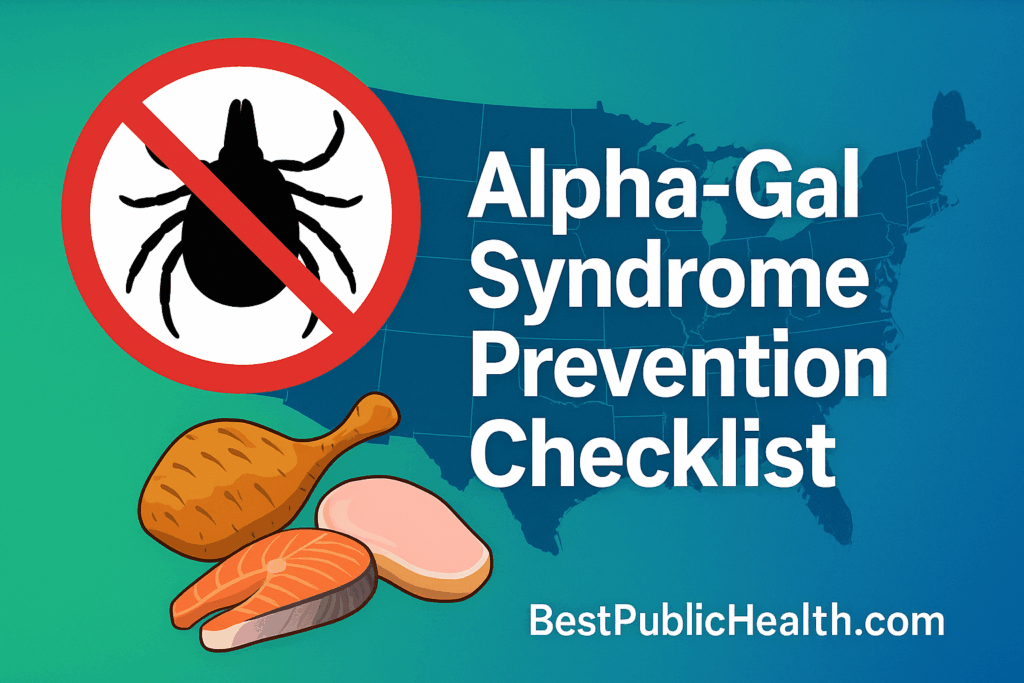
Step-by-step checklist to reduce your risk of tick bites and alpha-gal syndrome in 2025.
- Apply repellent
Use an EPA-approved repellent like DEET, picaridin, or IR3535 on exposed skin.
- Treat clothing
Spray clothes and gear with 0.5% permethrin or buy pre-treated items.
- Dress smart
Wear long sleeves, tuck pants into socks, and use light-colored clothes.
- Stay on clear paths
Walk in the center of trails and avoid tall grass or brush.
- Shower & check
Shower within 2 hours, do a full-body tick check, and dry clothes on high heat.
- Remove ticks quickly
Use fine-tipped tweezers, pull straight out, and clean the bite area.
- Protect pets
Check dogs and cats daily; use vet-approved tick preventives.
- Make your yard safe
Mow grass, clear brush, and add gravel/woodchip barriers.
- Extra care outdoors
Hunters and outdoor workers should always wear permethrin-treated gear and check daily.
Alpha-Gal Syndrome FAQs 2025: Your Top Questions Answered
Reactions usually appear 2–6 hours after eating mammal-derived foods, often waking people late at night after dinner.
Not always — many people tolerate milk and cheese, but sensitivity varies by person.
Yes — poultry, eggs, and seafood don’t contain alpha-gal and are generally safe.
No — alpha-gal is heat-stable, so cooking does not remove the risk.
Primarily the lone star tick, though black-legged ticks have also been linked in recent cases.
Doctors use a blood test for alpha-gal IgE along with your history and symptoms.
No — there’s no cure or vaccine, only management through avoidance and tick bite prevention.
Yes — many patients are prescribed epinephrine in case of severe reactions.
Exercise, alcohol, or certain medications can make reactions stronger or quicker.
Yes — some gelatin capsules, biologics, or animal-derived ingredients may cause reactions.